


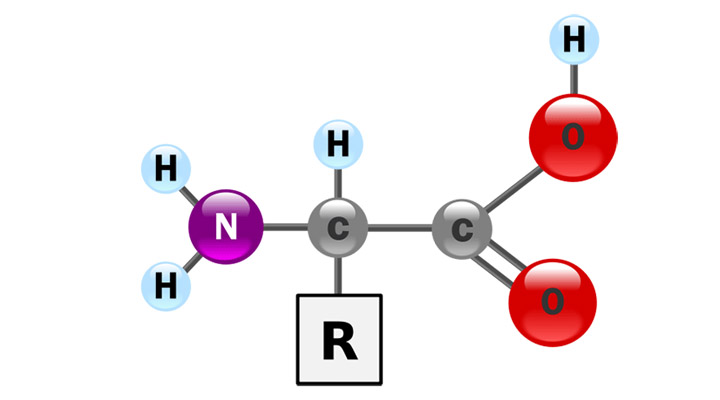
Amino Acids: Drivers of Plant Metabolism and Adaptation
Amino acids are among the most important organic compounds in plants and play a role that extends far beyond being the building blocks of proteins. These compounds sit at the core of numerous plant metabolic pathways, acting as metabolic intermediates, precursors of bioactive compounds, and regulators of physiological responses — thereby exerting a direct influence on plant growth and productivity.
Although plants are capable of synthesizing many of the amino acids they require through carbon fixation and the uptake and assimilation of nitrogen, under conditions where metabolic activity increases or plants are exposed to stress, an external supply of amino acids can support physiological processes and metabolic recovery.
The importance of amino acids in agriculture begins precisely here: they are not simply a source of nitrogen, but can contribute to energy and metabolic resource management, the synthesis of essential compounds, nutrient uptake, and plant adaptation to unfavorable environmental conditions.
Amino Acids and Plant Metabolism
Plant growth and productivity result from a complex network of biochemical reactions. Amino acids are involved throughout this network, either directly or as precursors, in processes such as the synthesis of proteins, enzymes, pigments, hormones, and defense-related compounds.
Among them, glutamate and glutamine hold a particularly important position in nitrogen metabolism, playing central roles in nitrogen assimilation, redistribution, and incorporation into organic compounds within the plant. Glycine and serine, meanwhile, participate in key pathways associated with carbon metabolism and photosynthesis.
Amino acids can therefore be considered part of a metabolic network that closely links carbon, nitrogen, energy, and plant growth.
Role of Amino Acids in Plant Growth and Development
The formation of every new leaf, root, flower, or fruit requires plant cells to divide, synthesize proteins and membranes, and carry out numerous metabolic reactions at high rates. By providing essential precursors for these processes, amino acids support cell growth and the formation of new tissues.
Proper root development is particularly important, as a more active root system has a greater capacity to absorb water and nutrients. At the same time, balanced shoot development and an active leaf area enhance the plant’s photosynthetic capacity, providing more photosynthates for growth, flowering, and fruit development.
The effect of amino acids should therefore not be viewed in terms of a single physiological process, but rather as support for the entire metabolic network underlying plant growth.
Amino Acids and Nutrient Uptake and Transport
One important characteristic of amino acids is the ability of certain amino acids to interact with mineral ions. Functional groups within their molecular structure can form complexes with certain nutrients and, under appropriate conditions, contribute to the solubility, transport, and availability of specific mineral elements.
In addition, supporting root metabolic activity may enhance the plant’s capacity to absorb and utilize nutrients available in the root environment — particularly relevant when factors such as unfavorable pH, salinity, unsuitable temperatures, or restricted root activity limit nutrient uptake.
Amino acids therefore do not replace essential mineral nutrients; rather, when used as part of a balanced nutritional program, they can contribute to greater nutrient-use efficiency and improved plant responses to nutrition.
Amino Acids: A Natural Tool for Plant Stress Response
Environmental stresses are among the major factors limiting crop growth and productivity. Drought, salinity, high or low temperatures, and other unfavorable conditions can disrupt water and ionic balance, photosynthetic activity, and cellular integrity.
Under these conditions, plants activate specific metabolic pathways to maintain cellular function and survival. One of the best-known compounds involved in these responses is proline, which accumulates under osmotic stress and contributes to osmotic adjustment, cellular water balance, and the stabilization of cellular and protein structures.
Severe stress can also increase the production of reactive oxygen species, leading to oxidative stress. Certain amino acids and their metabolic derivatives participate in regulating antioxidant defense systems and maintaining cellular redox balance.
Consequently, an adequate supply of amino acids during critical periods can help plants manage their metabolic resources for stress adaptation, maintain cellular activity, and recover more quickly following stress.
Role of Amino Acids in Crop Quality and Yield
Crop productivity is ultimately determined by a series of interconnected processes — from root development and vegetative growth to flowering, fruit set, and the filling of harvested organs.
By supporting metabolism, mineral nutrition, and stress responses, amino acids can play a supportive role during critical stages of plant development. Maintaining active photosynthesis and metabolism during these stages helps provide the photosynthates and compounds required for the formation and development of the plant’s economically important organs.
For this reason, applying amino acids during periods of increased metabolic demand or environmental stress may offer greater value.
Application Method and Timing
Depending on their origin, composition, concentration of free amino acids, and formulation, amino acids can be applied through foliar spraying or to the root zone, including through irrigation systems.
Foliar application provides a direct route for amino acids to reach plant tissues, particularly when root uptake is restricted. Root-zone application, in turn, can directly support root metabolic activity and enhance nutrient assimilation processes.
Timing of application is also important. Periods such as crop establishment, rapid vegetative growth, before and after flowering, fruit set and development, and periods of environmental stress are among the stages when the plant’s metabolic demand may increase.
That said, application rate and frequency should be determined according to the crop, amino acid concentration and composition, application method, plant developmental stage, and environmental conditions.
Conclusion
Amino acids should not be considered merely organic nitrogen-containing compounds. They are active components of the plant’s metabolic network, participating in the interaction between carbon and nitrogen metabolism, protein and enzyme synthesis, mineral nutrition, osmotic regulation, and plant responses to environmental stress.
The targeted use of amino acids can, by supporting metabolic activity, improving nutrient-use efficiency, strengthening plant adaptation to stress, and maintaining physiological processes during critical growth stages, contribute to more favorable conditions for plant growth, crop productivity, and quality.
Ultimately, the greatest value of amino acids is realized not as a substitute for mineral nutrition, but as a complementary physiological tool alongside proper management of nutrition, water, soil, and growing conditions.
Hi, this is a comment.
To get started with moderating, editing, and deleting comments, please visit the Comments screen in the dashboard.
Commenter avatars come from Gravatar.