

Introduction
Soil salinity is one of the most important abiotic stresses and a major limiting factor for plant growth, quality, and productivity in many agricultural systems. However, salinity is not simply a matter of increased salt concentration or a higher EC value. It is a complex condition that can affect water availability, ionic balance, soil structure, nutrient uptake, and root function.
An increase in the concentration of dissolved salts in the soil solution lowers its osmotic potential, making water uptake by the roots more difficult. As a result, plants may experience physiological water stress even when sufficient moisture is present in the soil.
At the same time, excessive accumulation of ions such as sodium (Na⁺) and chloride can disrupt cellular ionic balance, interfere with the uptake and transport of essential nutrients, and ultimately contribute to reduced root and shoot growth, impaired photosynthetic activity, lower crop quality, and reduced yield.
Therefore, effective salinity management requires a multidimensional approach that considers water, soil, cation balance, root conditions, and plant nutrition as interconnected components.
Salinity & Plant Stress
Salinity affects plants mainly through two interconnected mechanisms: osmotic stress and ionic stress.
Osmotic Stress
An increase in the concentration of soluble salts in the soil reduces soil water potential and makes water uptake by the roots more difficult.
Under these conditions, plants need to maintain a greater degree of osmotic adjustment in order to preserve cellular water status and continue normal metabolic processes. This can result in reduced growth, restricted leaf development, limited root development, and decreased photosynthetic activity.
In other words:
Water may be present in the soil, but it may not be sufficiently available to the plant.
Ionic Stress
Under saline conditions, the progressive accumulation of ions such as Na⁺ and Cl⁻ in the root environment and plant tissues can disturb cellular ionic balance.
Excessive sodium can interfere with the uptake and transport of essential nutrients and, at high concentrations, negatively affect normal cellular functions.
Therefore, the effects of salinity can begin in the root zone and extend to the cellular level, photosynthesis, plant growth, and ultimately crop performance.
Sodium Management
In saline and sodic soils, sodium is one of the most important ions requiring careful management.
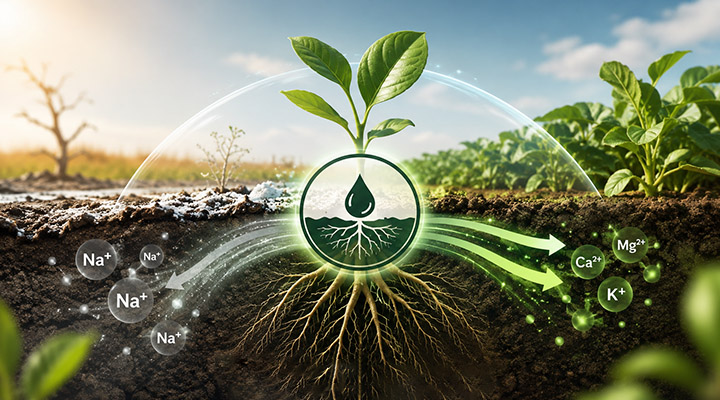
Negatively charged surfaces associated with clay minerals and soil organic matter retain cations such as Ca²⁺, Mg²⁺, K⁺, and Na⁺ within the soil exchange complex. This exchange complex plays an important role in nutrient retention and exchange and is closely related to Cation Exchange Capacity (CEC).
When the proportion of exchangeable sodium increases, particularly in sodic soils, soil structural stability can deteriorate.
Excess sodium can promote clay dispersion, resulting in reduced aggregate stability, lower water infiltration, impaired soil aeration, and poorer root-zone conditions.
As a result, an undesirable cycle may develop:
Increased sodium → clay dispersion → structural degradation → reduced water infiltration → reduced leaching → greater salt accumulation
For this reason, sodium management should be considered from the perspectives of soil chemistry, soil physics, and plant physiology.
Calcium Correction
Calcium is one of the most important cations involved in the management of sodicity-affected soils.
Divalent calcium Ca²⁺ can contribute to the displacement of sodium from soil exchange sites and help improve the balance of exchangeable cations.
However, an important principle must be considered in the reclamation of sodic soils:
Displacing sodium is not the same as removing sodium.
Once sodium has been displaced from exchange sites, adequate leaching and drainage are required to remove it from the soil profile.
Therefore, the correction process can be considered as:
Ca²⁺ supply → Na⁺ displacement → Leaching → Reduction of exchangeable sodium → Improved root-zone conditions
This process is most effective when supported by appropriate irrigation management, adequate drainage, and suitable soil physical conditions.
Calcium & Plant Physiology
The role of calcium is not limited to the soil.
Calcium is an essential element for maintaining plant cell structure and integrity and contributes to cell wall strength, membrane stability, and cellular signaling.
Calcium also plays an important role in regulating plant responses to environmental stresses and participates in cellular signaling pathways involving Ca²⁺ and proteins such as calmodulin.
Therefore, adequate calcium supply can be important from two complementary perspectives:
In the soil: supporting cation balance and the management of exchangeable sodium.
In the plant: supporting cellular structure and physiological responses to environmental stress.
Soil Improvement
Salinity management cannot be considered complete without addressing the physical and biological condition of the soil.
A suitable root environment must be able to receive and transmit water, provide sufficient oxygen to the roots, and maintain favorable conditions for root development and biological activity.
Organic matter plays an important role in this process and can contribute to soil aggregate stability, water retention, improvement of certain soil physical properties, and support of biological activity.
In salt-affected soils, maintaining soil structural quality becomes particularly important because even when sufficient water is available, poor permeability and inadequate aeration can limit the actual availability of water and oxygen to the roots.
Root Zone Management
The root is the first part of the plant to encounter saline soil conditions, and root health plays a decisive role in the plant’s ability to respond to stress.
For optimal root function, three fundamental factors should remain in balance:
Available water + sufficient oxygen + accessible nutrients
Salinity and sodicity can affect all three.
Therefore, root-zone management should not focus solely on EC. Exchangeable sodium, soil structure, permeability, drainage, moisture status, and nutrient balance should also be considered.
The more balanced the root environment, the greater the potential for healthy root development and efficient plant utilization of available water and nutrients.
PINOSALT
A Comprehensive Approach to Salinity Management
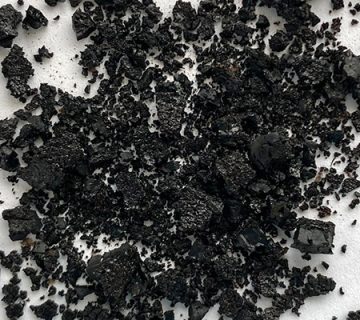
PINOSALT is a multi-component formulation containing calcium, magnesium, organic matter, organic carbon, and lignosulfonic acid, developed for use in salinity management programs and for supporting soil and root-zone conditions.
The PINOSALT approach is based on the principle that salinity is not a single-factor problem; therefore, its management should not rely on a single mechanism.
The formulation of PINOSALT addresses several important aspects of the soil–root–plant system simultaneously:
- Cation balance and sodium management
- Calcium and magnesium supply
- Support for soil physical and chemical properties
- Supply of organic matter and organic carbon
- Support for root-zone conditions
- Support for plant nutritional balance
Magnesium & Nutritional Balance
Salinity can affect nutrient uptake and distribution, potentially leading to nutritional imbalance.
Under such conditions, maintaining plant access to essential nutrients becomes increasingly important.
Magnesium (Mg²⁺) is an essential plant nutrient and, as the central atom of the chlorophyll molecule, plays a direct and vital role in photosynthesis.
It also participates in the activation of numerous enzymes, energy transfer, and several metabolic processes within the plant.
The presence of magnesium in PINOSALT alongside calcium provides an additional nutritional dimension to the formulation, extending its role beyond a calcium-based soil amendment alone.
Organic Matter & Soil Quality
Organic matter is an important component of soil functionality.
It can contribute to the formation and stability of soil aggregates, moisture retention, soil–water interactions, and biological activity.
By providing organic matter and organic carbon, PINOSALT addresses another important dimension of salinity management alongside cation management.
The objective is not simply to modify a single chemical parameter, but to support the physical, chemical, and biological balance of the soil and create more favorable conditions for the environment in which roots live and function.
Lignosulfonic Acid
One of the important components of the organic fraction of PINOSALT is lignosulfonic acid.
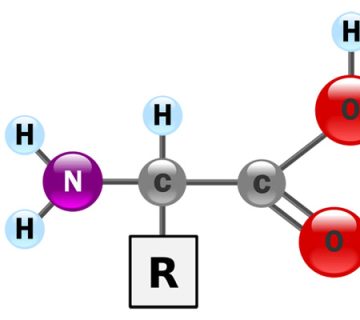
Lignosulfonates are organic compounds derived from lignin and are used in agricultural formulations because of their ability to interact with cations and support complexation and nutrient availability management.
The presence of lignosulfonic acid alongside calcium, magnesium, and organic matter creates a multi-component formulation in which nutrient supply, soil condition management, and root-zone support are addressed together.
Salinity, Nutrition & Plant Performance
Salinity can affect the effective availability and uptake of nutrients even when those nutrients are present in the soil.
Ionic competition, changes in the soil solution, and impaired root function may reduce the plant’s ability to fully utilize the nutritional resources available in the soil.
Therefore, salinity management should be accompanied by maintaining nutritional balance and the physiological capacity of the plant.
In this context, calcium and magnesium have different but complementary functions:
Calcium: cellular structure, tissue stability, cellular signaling, and stress response.
Magnesium: chlorophyll, photosynthesis, enzyme activation, and energy transfer.
This combination gives PINOSALT an approach that extends beyond salinity management alone.
Integrated Salinity Management
Salinity is not a single-factor problem, and its management should not be one-dimensional.
A scientific salinity management program should consider a range of factors simultaneously:
- EC and salt concentration
- Exchangeable sodium and cation balance
- CEC and soil structure
- Water infiltration and leaching
- Organic matter and soil biological conditions
- Moisture and aeration within the root zone
- Plant nutritional status and physiological capacity
Within this approach, soil, water, roots, and plants are not separate components; rather, they form an interconnected system in which a disturbance in one component can influence the performance of the others.
PINOSALT | From Soil to Plant
PINOSALT has been developed with a combination of calcium, magnesium, and organic components for inclusion in programs aimed at salinity management, soil improvement, and root-zone support.
Through a multidimensional approach, the product does not focus solely on a single parameter, but considers a range of factors that influence the health and performance of the soil–root–plant system.
The PINOSALT approach includes:
- Management of cation balance
- Support for soil physical and chemical conditions
- Support for the root-zone environment
- Maintenance of plant nutritional balance
- Support for plant performance under saline stress
Conclusion
PINOSALT provides a comprehensive approach to managing conditions associated with salinity and sodicity, beginning with cation balance and sodium management and extending to soil improvement, root-zone conditions, and plant nutritional balance.
The combination of calcium and magnesium with organic matter, organic carbon, and lignosulfonic acid creates a formulation that can be incorporated into a scientific and integrated approach to salinity management and support of the soil–root–plant system.
Because salinity is not simply a number in a soil analysis; it is a disturbance in the balance of a living system.
Effective salinity management begins when soil, water, roots, and plants are considered as one interconnected system.